The Art of Silence: How Today's Most Celebrated Directors Wield Restraint as Their Sharpest Tool

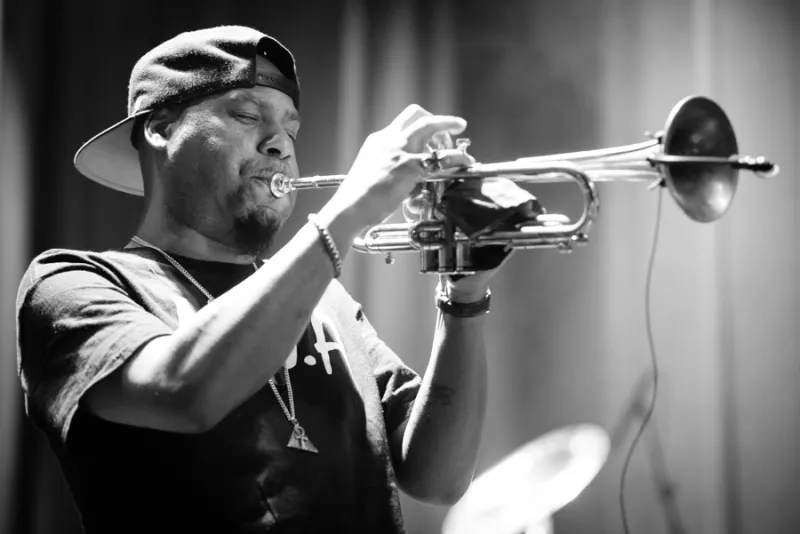
Photo: Jonespictures, CC0, via Wikimedia Commons
There is a particular kind of courage required to leave the frame empty. In a commercial landscape that rewards noise — louder scores, faster cuts, more elaborate visual effects — choosing stillness is not merely an aesthetic preference. It is a declaration of trust: trust in the story, trust in the performer, and above all, trust in the audience.
At Principe Productions, we believe that the most enduring narratives are shaped not only by what is placed in front of the camera, but by the deliberate, disciplined act of keeping certain things away from it. The principle of restraint has quietly become one of the defining signatures of contemporary filmmaking, and the directors who practice it most rigorously are producing some of the most emotionally resonant work of this generation.
When Less Becomes the Language
The instinct to show everything is understandable. Production budgets are significant, sets are elaborate, and the pressure to justify every dollar spent can push filmmakers toward maximalism. Yet the directors who have most profoundly shaped modern cinema understand that economy of expression is not a limitation — it is a discipline that sharpens meaning.
Consider the final sequence of The Rider (2017), Chloé Zhao's devastating portrait of a young rodeo rider confronting the end of his competitive life. Zhao resists the urge to dramatize grief. Instead, she allows her non-professional cast to simply exist within the landscape of the South Dakota Badlands, trusting that the wide, unhurried frame will do the work that dialogue cannot. The result is a sequence that lingers in the viewer's memory long after the credits roll — not because of what was said or done, but because of what was withheld.
This is restraint operating at its highest register.
The Cut That Changes Everything
The decision of when to cut is perhaps the most consequential choice a director makes — and the most frequently misunderstood. Conventional wisdom in commercial filmmaking favors the coverage approach: shoot everything, cut often, and let the editing room decide. But directors who subscribe to the principle of restraint approach the cut with surgical precision.
Kelly Reichardt, whose films Wendy and Lucy, First Cow, and Showing Up have earned sustained critical admiration, has spoken extensively about the relationship between duration and emotional truth. Her scenes frequently extend past the point where a more commercially minded director would intervene, allowing discomfort, ambiguity, and silence to accumulate until they carry genuine dramatic weight. The audience is not told how to feel. They are placed inside the experience and permitted to find their own footing.
Similarly, Barry Jenkins' Moonlight — the Academy Award winner for Best Picture in 2017 — deployed restraint not only in its editing rhythm but in its approach to dialogue. Entire emotional arcs were communicated through glances, pauses, and the careful choreography of bodies in space. Jenkins understood that the camera's gaze, held long enough on a face, becomes an act of intimacy that no line of scripted dialogue can replicate.
Television's Quiet Mastery
The principle of restraint has migrated powerfully into prestige television, where serialized storytelling creates new opportunities — and new temptations — for excess. Series like Severance (Apple TV+), The Bear (FX), and Slow Horses (Apple TV+) have each demonstrated that disciplined visual storytelling is not exclusive to theatrical cinema.
The Bear, in particular, has become a case study in how restraint functions within a frenetic environment. Creator Christopher Storer and his directing team built sequences of extraordinary tension not through conventional thriller mechanics, but through the accumulation of small, precisely observed details: the sound of a kitchen in full service, a phone call that goes unanswered, a character standing alone in an empty dining room. The show's most devastating moments are frequently its quietest.
Slow Horses, adapted from Mick Herron's espionage novels, takes a different approach. Director James Hawes constructs scenes around what characters choose not to say — the bureaucratic silences of British intelligence culture rendered as a kind of institutional dread. The show's restraint is ideological as much as aesthetic, reflecting a worldview in which the most dangerous information is always the information being suppressed.
The Director's Discipline: Principles Behind the Practice
What separates directors who practice restraint effectively from those who simply produce inert or underwritten work? The distinction lies in intentionality. Restraint is not the absence of decision-making — it is decision-making at its most rigorous.
Several principles emerge consistently from studying directors who have mastered this approach:
Trust the architecture of the scene. When a script, performance, and production design are working in genuine harmony, the camera's role is to observe, not to interpret. Directors who understand this resist the impulse to editorialize through excessive coverage or intrusive scoring.
Respect the audience's intelligence. American cinema has historically struggled with the impulse to explain — to ensure that no emotional beat is left unmarked by music, reaction shots, or expository dialogue. Directors committed to restraint make a different wager: that audiences are capable of completing the emotional equation themselves, and that the satisfaction of doing so is part of the cinematic experience.
Understand what the frame excludes. Every composition is simultaneously a decision about what lies outside the frame. The most skilled directors are as deliberate about exclusion as they are about inclusion, recognizing that the imagination of an engaged viewer is a more powerful instrument than any production value.
Allow time to function as a dramatic element. Duration is not neutral. A held shot accumulates meaning. A scene that refuses to end on schedule forces the viewer to remain present in a moment of discomfort or ambiguity. This is restraint working at the level of time itself.
The Commercial Case for Minimalism
There is a practical argument for restraint that extends beyond aesthetics. Films built on disciplined, minimal storytelling frequently carry lower production costs and demonstrate remarkable longevity in audience engagement. Moonlight was produced on a budget of approximately $1.5 million and went on to gross over $65 million worldwide, winning three Academy Awards. The Rider was made for under $1 million and launched Chloé Zhao's career trajectory toward Nomadland and, eventually, the Marvel Cinematic Universe.
For independent producers and emerging filmmakers, this represents a compelling creative and financial model. Restraint is not a consolation prize for limited resources. It is a legitimate and historically validated approach to storytelling that has produced some of the most significant works in the American cinematic canon.
A Principle Worth Protecting
As streaming platforms multiply and the pressure to produce content at volume intensifies, the principle of restraint faces new pressures. The algorithmic logic of digital distribution tends to reward immediate engagement — the hook in the first thirty seconds, the cliffhanger at the episode's end — rather than the slower, more demanding pleasures of minimalist storytelling.
Yet the audience for restrained, carefully crafted cinema has not diminished. If anything, in a media environment saturated with stimulation, the deliberate pause — the held frame, the unscored silence, the scene that trusts its performers to carry the weight — has become something genuinely rare. And rarity, in any market, carries its own form of value.
At Principe Productions, we remain committed to the idea that the stories most worth telling are those willing to take the time to be told properly. The principle of restraint is not a retreat from ambition. It is ambition of a different and arguably more demanding kind — the ambition to mean something, quietly and without apology.