When the Frame Outshines the Story: How Technical Ambition Is Eclipsing Narrative Purpose

Photo: Employee(s) of Mingxing Film Company, Public domain, via Wikimedia Commons
There is a particular kind of disappointment that settles in after watching a film of extraordinary visual splendor — one rendered in luminous photography, propelled by an immersive sound design, and populated by meticulously constructed worlds — only to realize, somewhere around the second act, that nothing of consequence is actually happening to anyone you care about. The spectacle is undeniable. The story, regrettably, is not.
This is not an occasional hazard of modern production. It has become a defining pattern.
Across American film and television, the machinery of technical excellence has grown so sophisticated, so celebrated, and so expensive to deploy that it has quietly repositioned itself at the center of the creative enterprise. Cinematography, visual effects, production design, and sound engineering — disciplines that were once understood as instruments of storytelling — have, in many contemporary productions, become the story itself. The result is a body of work that impresses without resonating, that stimulates without moving, and that is forgotten almost as quickly as it is consumed.
The Inversion of Means and Ends
To understand how this happened, it helps to consider what production values were originally intended to accomplish. A sweeping wide shot of a desolate landscape was not designed to showcase a cinematographer's compositional skill. It was designed to externalize a character's isolation. An intricate sound mix was not constructed to demonstrate an audio engineer's range. It was built to place an audience inside a character's fractured psychological state.
Technical craft, at its most purposeful, is invisible. It operates in service of emotional and narrative truth, amplifying what the script and the performances have already established. When it works correctly, viewers do not think about the camera. They think about the people on screen.
The inversion occurs when that hierarchy collapses — when the technical achievement becomes the primary reason a scene exists, rather than a vehicle for the scene's dramatic function. At that point, the means have displaced the ends, and the audience, whether consciously or not, senses the substitution.
A Pattern Written in Budgets
The financial architecture of contemporary production has accelerated this inversion considerably. As streaming platforms competed aggressively for subscriber attention through the mid-2010s and into the 2020s, production budgets for prestige content inflated at a rate that outpaced any corresponding investment in development. Writers' rooms shrank. Development timelines compressed. But the visual effects budget for a single episode of a flagship series could rival the entire production cost of a mid-budget feature film from a decade prior.
The market signal this sent to creative decision-makers was unambiguous: spectacle sells subscriptions. A trailer filled with breathtaking imagery generates clicks, social conversation, and critical notice in ways that a carefully constructed character study rarely does in its pre-release phase. The incentive to invest in the visible and the immediately impressive over the intrinsic and the narratively coherent was — and remains — structurally embedded in how projects are greenlit, marketed, and evaluated.
What gets lost in this calculation is the long game. Audiences do not sustain loyalty to productions that dazzle without meaning. They sustain loyalty to stories that matter to them — stories populated by characters whose struggles feel genuine, whose choices carry weight, and whose arcs leave some residue of insight about what it means to be human.
The VFX Ceiling
Visual effects represent perhaps the most instructive case study in this dynamic. The technology available to contemporary productions is, by any historical measure, extraordinary. Environments that would have required location shoots on multiple continents can now be constructed entirely in post-production. Creatures, weather systems, and physical forces of nature can be rendered with a fidelity that earlier generations of filmmakers could not have imagined.
And yet, for all of that capability, some of the most emotionally devastating moments in American cinema have been achieved with almost no visual effects whatsoever. A close-up on a face. A held pause before a line of dialogue. A cut to an empty room. These are not failures of technical ambition. They are expressions of narrative confidence — a filmmaker's trust that the story, properly told, requires no augmentation.
The productions that lean most heavily on effects-driven spectacle frequently do so in inverse proportion to their confidence in the underlying material. When a script cannot generate tension through character and situation, a collapsing cityscape will temporarily fill the void. When a relationship lacks emotional truth, a visually overwhelming backdrop can create the illusion of significance. These are not creative solutions. They are creative deferrals — and audiences, even those who cannot articulate precisely why, register the difference.
Craft Without Conviction
It would be a misreading of this argument to suggest that technical excellence is, in itself, a problem. It is not. The finest productions in American film history have been technically accomplished precisely because their makers understood that craft elevated by narrative purpose becomes transcendent. The cinematography of Gordon Willis, the sound design of Walter Murch, the production design of William Cameron Menzies — these represent technical achievement in its most legitimate form, because every choice those artists made was tethered to the story they were telling.
The distinction, then, is not between high production values and low production values. It is between production values that serve a story and production values that substitute for one. The former is craftsmanship. The latter is theater — and not the meaningful kind.
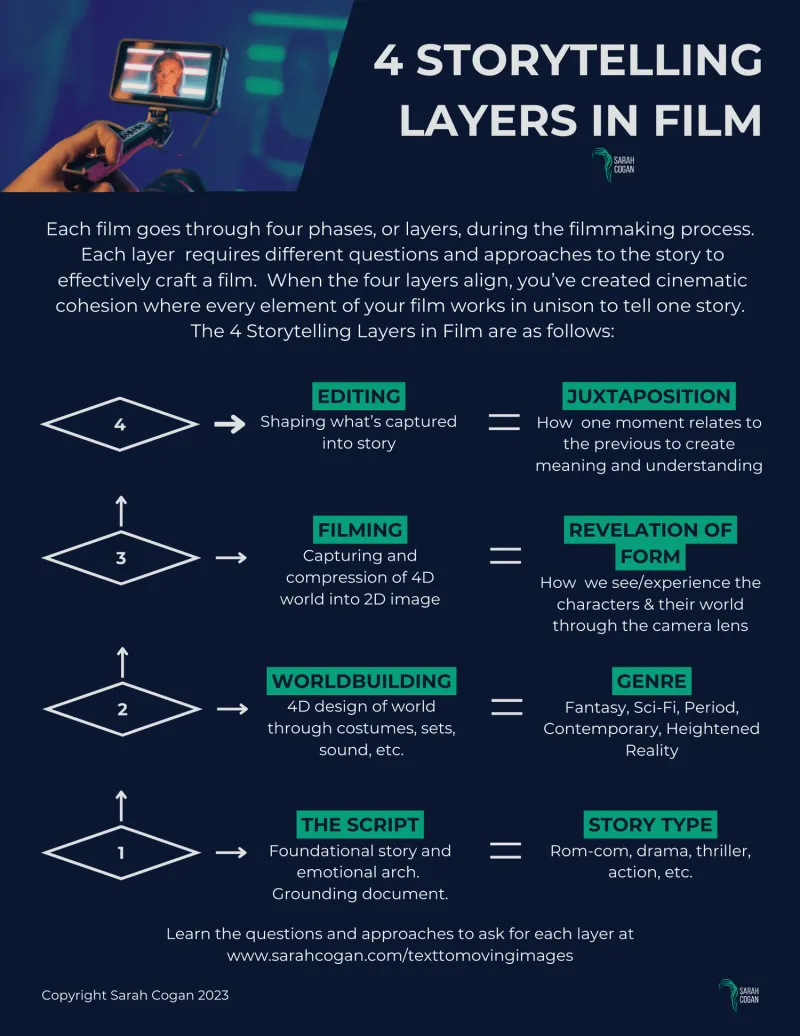
For producers, directors, and development executives, the practical implication is straightforward, if not always comfortable: the questions that must be asked earliest in any production process are not about visual language or technical approach. They are about character. They are about stakes. They are about what, precisely, this story is attempting to say about the world and the people who inhabit it. Every subsequent decision — including every technical decision — should flow from those answers.
Recalibrating the Standard
The American media industry is not without examples of productions that have navigated this tension successfully. Films and series that have earned enduring critical and audience regard almost invariably demonstrate a coherent relationship between their technical ambitions and their narrative intentions. The visual grammar supports the emotional argument. The sound design deepens the psychological reality. The production design reflects and reinforces the thematic concerns of the story.
This is not an accident. It is the result of a development culture that refuses to allow technical planning to outpace narrative clarity — one in which the story is genuinely understood before a single dollar is committed to its visual realization.
Building that culture requires resistance to the most powerful incentive structures currently operating in the industry. It requires the willingness to delay, to revise, and occasionally to diminish the spectacle in service of the substance. It requires, above all, the conviction that audiences ultimately come to stories for the same reason they always have: not to be dazzled, but to be moved.
That conviction is not naïve. It is, in fact, the most commercially sound position available to any serious producer. Spectacle ages. Meaning endures. And it is meaning — not resolution, not frame rate, not the scale of a visual effects budget — that keeps audiences returning, recommending, and remembering.
The frame is a tool. The story is the point. Keeping that distinction clear is not merely an artistic imperative. In a media landscape saturated with technical achievement and starved for genuine resonance, it may be the most urgent business imperative as well.