The Unpolished Advantage: How Raw, Transparent Creators Are Winning the Loyalty War Against Established Media

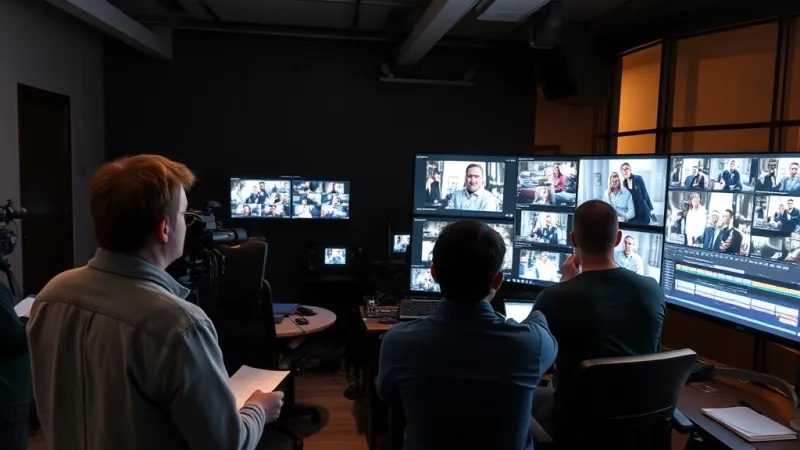
Photo: Joe Peacock, CC BY-SA 4.0, via Wikimedia Commons
For decades, the American entertainment industry operated on a foundational assumption: audiences want the best possible version of a story, delivered through the highest achievable production quality. Networks, studios, and streaming platforms invested billions in reinforcing that belief. Yet something unexpected has been unfolding at the edges of the media landscape — and it is no longer at the edges.
Viewers are not simply tolerating imperfection. They are actively seeking it out, rewarding it with their attention, their subscriptions, and perhaps most valuably, their trust.
The Psychology Behind the Shift
To understand why unfiltered content is outperforming polished institutional output in audience engagement metrics, one must first examine what audiences are actually responding to. Research from Nielsen and various independent media analytics firms consistently points to a single variable: perceived authenticity.
When a creator documents a failed pitch meeting, walks their audience through a script that was rejected seventeen times before finding a home, or simply admits on camera that a project nearly collapsed under financial pressure, something neurologically significant occurs in the viewer. The social distance between audience and creator collapses. Parasocial connection — the psychological phenomenon in which viewers develop one-sided emotional bonds with media figures — deepens substantially when that figure demonstrates genuine vulnerability.
This is not sentimentality. It is behavioral economics applied to attention. Audiences are making rational choices about where to invest their limited viewing time, and transparency has become a form of currency that institutional media has historically been reluctant to spend.
Case Studies in Creative Transparency
Consider the trajectory of independent documentary filmmaker Sara Dosa, whose candid public discussions about the funding struggles and editorial compromises behind her work generated audience interest that preceded and arguably amplified the critical reception of her films. Or examine the remarkable growth of podcast networks built around the creative process — shows where writers, directors, and producers dissect not only what worked but what failed catastrophically and why.
On YouTube and Substack, a new generation of American creators has built audiences in the hundreds of thousands — sometimes millions — not by concealing the machinery of their craft, but by making that machinery the content itself. Filmmakers posting raw, unedited behind-the-scenes footage of low-budget shoots. Screenwriters publishing first drafts alongside finished scripts, inviting direct comparison. Producers sharing rejection letters from studios with the same prominence they give to greenlight announcements.
The common thread is not the absence of skill. These creators are frequently as technically capable as their institutional counterparts. The differentiating factor is their willingness to narrate the journey rather than present only the destination.
What Established Institutions Are Getting Wrong
Large media companies face a structural disadvantage in this environment that is worth naming directly. Institutional transparency is, almost by definition, managed transparency. When a major network releases a making-of documentary or a streaming platform publishes a creator interview, every word has been vetted, approved, and shaped by communications departments whose primary function is reputation management.
Audiences, particularly younger American viewers who have grown up in the participatory culture of social media, are extraordinarily skilled at detecting this kind of curated openness. They recognize the difference between a studio executive discussing creative challenges in a controlled press junket setting and a creator posting at midnight about the genuine fear that their project might not survive the week.
The result is a credibility gap that production value alone cannot bridge. A beautifully shot promotional featurette from a major distributor may demonstrate technical excellence while generating a fraction of the genuine engagement produced by a lo-fi video diary from an independent creator.
The Business Implications for Producers
For media production companies navigating this landscape, the strategic question is not whether to acknowledge this shift but how to respond to it without sacrificing the institutional integrity that distinguishes professional production from amateur content creation.
Several forward-thinking production houses have begun experimenting with what might be called structured transparency — deliberate, ongoing documentation of their creative and development processes shared directly with audiences through owned channels. This approach differs meaningfully from traditional marketing in that it does not wait for a finished product to begin the conversation. The audience is invited into the room, metaphorically speaking, while the work is still being made.
This model carries genuine risk. Sharing process means sharing uncertainty, and uncertainty is uncomfortable for organizations accustomed to controlling narrative. A project that is publicly documented and subsequently cancelled becomes a visible failure rather than a quiet one. Yet the producers who have embraced this vulnerability report that audiences respond to cancelled or restructured projects with understanding and continued loyalty when the communication has been honest throughout.
Redefining Production Value in the Transparency Era
Perhaps the most significant conceptual challenge this shift presents is to the very definition of production value. For most of the twentieth century, production value meant technical quality — resolution, sound design, visual effects, the caliber of talent in front of and behind the camera. These remain important. They are not, however, sufficient.
In the current environment, production value must be understood to include relational value: the quality of the connection between creator and audience, the depth of trust that has been established, and the degree to which viewers feel genuinely invested in the creative endeavor rather than merely entertained by its output.
This is a more demanding standard in some respects. Technical quality can be achieved through sufficient budget. Relational trust must be earned over time through consistent, honest communication — and it can be lost far more quickly than it is built.
The Path Forward
The creators and production companies best positioned for the next decade of American media are those who recognize that storytelling has always been, at its core, a relational act. The most enduring stories — the ones that generate genuine cultural impact and lasting audience loyalty — are those in which audiences feel not merely entertained but genuinely seen.
Transparency about the creative process is, in this light, not a marketing strategy or a social media tactic. It is an extension of the storytelling itself. The struggle to bring a story into existence is part of the story. The failures and revisions and near-collapses are part of the story. And audiences, it turns out, have always been ready to receive that fuller, messier, more human narrative.
The question now is whether the institutions that have long controlled the channels of American storytelling are prepared to tell it.