Original IP Is Now Hollywood's Most Precious Resource — Here's Why the Streaming Era Made It That Way
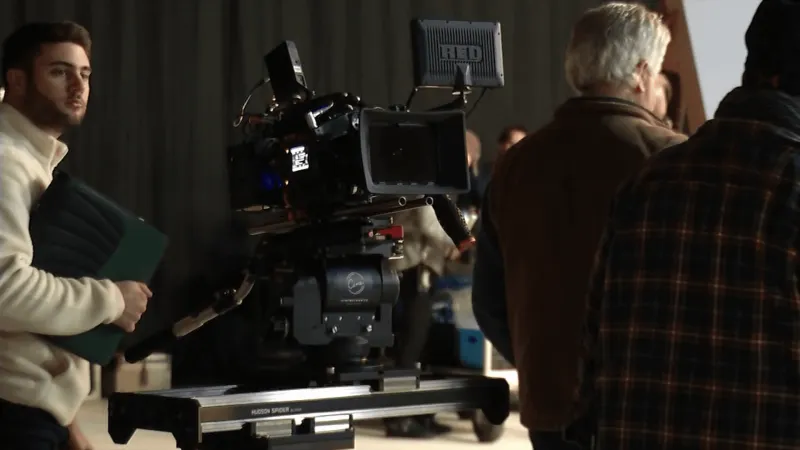
Photo: Hollywood film studio executive meeting streaming content development, via www.wdio.com
For decades, Hollywood operated on a relatively stable hierarchy: studios controlled the machinery of distribution, talent controlled the machinery of attention, and franchises — sequels, reboots, and adaptations of proven properties — controlled the machinery of risk management. Then streaming arrived, and within the span of roughly fifteen years, every assumption embedded in that hierarchy was upended.
Today, the most consequential currency in American media is not a star's name above the title or a beloved book series waiting to be adapted. It is original intellectual property — stories conceived from scratch, owned outright, and capable of generating the kind of cultural urgency that transforms a casual viewer into a devoted subscriber.
The Subscription Economy Changes Everything
Understanding why original IP has risen to this position requires understanding what streaming platforms are actually selling. Unlike traditional broadcast or theatrical models, where revenue was tied directly to viewership or ticket sales, subscription platforms sell access. Their financial survival depends not on whether a single title performs, but on whether a subscriber renews their monthly commitment month after month.
That distinction changes the calculus of content development in profound ways. A franchise adaptation may generate enormous opening-weekend enthusiasm, but if it does not create the kind of sustained conversation — the watercooler urgency, the social media speculation, the genuine emotional investment — that keeps subscribers from canceling, its long-term value to a platform is limited. Original IP, by contrast, creates exclusive cultural territory. No other platform can air it. No competitor can claim it. When a show or film becomes a genuine phenomenon, the platform that owns it becomes, in the minds of subscribers, indispensable.
This logic has driven an extraordinary investment in original development across the industry. According to publicly available financial disclosures, major streaming platforms collectively spent tens of billions of dollars on content in recent years, with a growing proportion of that spending directed toward wholly owned original properties rather than licensed catalog content.
Greenlit on Merit: The New Development Landscape
Perhaps the most significant consequence of this shift is its effect on which stories get greenlit and who gets to pitch them. The traditional studio system rewarded familiarity. A producer walking into a development meeting with a recognizable property — a bestselling novel, a legacy franchise, a foreign-language hit ripe for American adaptation — carried a built-in advantage. The pre-existing audience was proof of concept.
That advantage has not disappeared, but it has been meaningfully diluted. Platforms increasingly recognize that licensing a pre-existing property means sharing its cultural ownership with whoever held the rights before. When a streaming service adapts a beloved novel, the audience's affection belongs partly to the author, partly to the source material, and only partly to the platform itself. An original creation, however, generates loyalty that flows exclusively toward its producer and distributor.
This has opened doors — genuinely, if not uniformly — for creators with compelling original visions. Several of the most discussed American streaming hits of the past five years were greenlit not because they were based on proven source material, but because the creative teams behind them made persuasive cases for stories that had never been told before. Producers who have navigated this landscape describe a development environment that is simultaneously more open and more demanding: platforms are willing to take creative risks they would not have considered a decade ago, but they expect those risks to be articulated with unusual clarity and confidence.
"You have to walk in knowing your world completely," one independent producer, speaking broadly about the current pitch environment, noted in a recent industry forum. "Platforms aren't buying a title anymore. They're buying a universe, a subscriber relationship, a piece of cultural real estate."
The Independent Creator's Moment
For independent production companies — organizations like Principe Productions that operate outside the traditional studio system — the premium on original IP represents both a challenge and a historic opportunity. The challenge is financial: developing original intellectual property from scratch requires investment in writers' rooms, development executives, and legal infrastructure to protect ownership before a single frame is shot. Without a studio's balance sheet, that investment demands discipline and strategic clarity.
The opportunity, however, is considerable. Independent creators who own their IP outright enter negotiations with streaming platforms from a position of genuine leverage. They are not simply selling a service — producing content on a platform's behalf — but licensing cultural assets that the platform cannot replicate or replace. In an environment where platforms are competing aggressively for exclusive, subscriber-retaining content, the creator who holds a compelling original property holds real power.
This dynamic has contributed to a notable restructuring of deal-making in the industry. First-look deals, overall deals, and co-production arrangements have all been renegotiated in recent years with IP ownership as a central point of contention. Creators are increasingly reluctant to sign arrangements that transfer full intellectual property rights to a platform, and platforms — aware that their long-term value depends on owning the stories that define their identity — are pushing back with equal force.
What Gets Lost and What Gets Found
It would be incomplete to celebrate this shift without acknowledging its tensions. The premium on original IP has, in some respects, concentrated opportunity among creators who already have enough industry standing to command development deals. Breaking in with a wholly original concept requires a platform's trust in your creative vision, and that trust is rarely extended to voices without some established credibility.
There is also the question of what kinds of stories the market rewards. Original IP that demonstrates franchise potential — stories with sequels, spinoffs, and merchandise built into their DNA — attracts more investment than self-contained narratives, however artistically distinguished. The logic of the subscription economy favors worlds over stories, systems over singular experiences.
And yet, within those constraints, genuinely new voices and genuinely new stories are reaching American audiences at a scale that would have been unimaginable in the broadcast era. The streaming economy's hunger for original content has created demand that no single creative tradition can satisfy, which means the industry must look further — across geographies, demographics, and storytelling conventions — than it ever has before.
The Stakes Going Forward
The streaming wars are far from over, and the platforms waging them are still learning which bets pay off. But the lesson that original intellectual property is the most durable competitive asset in this landscape appears to have taken hold across the industry, from the largest studios to the most nimble independent production houses.
For those in the business of crafting stories — of building worlds from nothing and finding the audiences those worlds deserve — this moment carries genuine significance. The industry's most powerful institutions are, for perhaps the first time, financially incentivized to value originality not as an artistic virtue but as a business imperative. Whether that alignment of economics and creativity produces the golden era of American storytelling that the moment seems to promise remains, appropriately, an unfinished story.