Speed as Creative Discipline: What Ultra-Fast Film Production Reveals About the Future of Storytelling
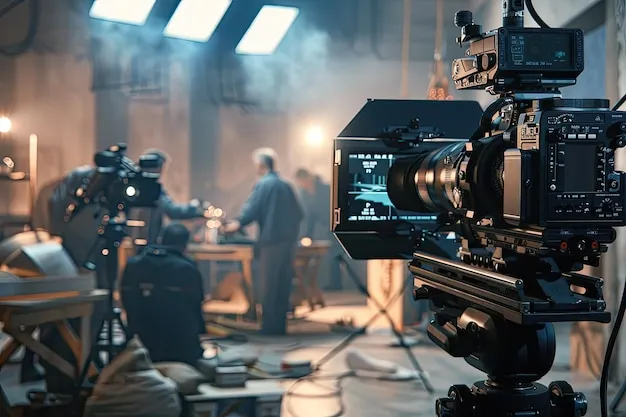
Photo: film director cinematographer on set digital camera fast production, via img.freepik.com
There is a particular mythology embedded in how American culture imagines great filmmaking. It involves years of patient development — scripts revised across dozens of drafts, locations scouted and re-scouted, performances coaxed through weeks of rehearsal. The mythology is not entirely wrong. Some of the most enduring American films were indeed the products of painstaking, extended creative labor. But it has always been incomplete, and a new generation of production professionals is making that incompleteness impossible to ignore.
Across the country, from independent studios in Atlanta to digital-first production houses in Los Angeles, a distinct movement is taking shape: projects conceived, shot, edited, and distributed within timelines that would have been considered reckless a decade ago. Thirty days from script to screen is no longer a boast or an anomaly. For a growing number of creators, it is a deliberate methodology.
The Technology That Made Speed Possible
To understand why rapid-turnaround production has become viable at a level of quality that warrants serious critical attention, one must first account for the technological shifts that made it possible. The transition from film to digital acquisition transformed the economics of shooting. The proliferation of high-quality mirrorless cameras and compact cinema rigs reduced the logistical footprint of a working set. Cloud-based collaboration tools allowed editors, colorists, and sound designers to work simultaneously across different cities, compressing post-production timelines that once unfolded sequentially.
Artificial intelligence has entered the conversation as well, though its role remains more contested than its proponents sometimes acknowledge. AI-assisted color grading, dialogue cleanup, and even preliminary cut assembly have accelerated workflows in measurable ways. Whether those tools enhance or diminish the creative judgment of the humans deploying them is a debate that plays out differently in every cutting room.
Flexible financing models have contributed equally to this shift. The rise of micro-budget investment frameworks, creator-funded development through digital revenue streams, and platform pre-sales that provide production capital before a single day of shooting has allowed projects to move from greenlight to production without the extended financing runway that traditional studio models required.
The Case for Speed: Creative Liberation
Directors who have worked within accelerated production schedules frequently describe the experience in terms that their more traditionally paced peers might find surprising: not as deprivation, but as clarification.
When a production cannot afford to deliberate indefinitely, every creative decision carries heightened weight. A director who has three days to shoot a sequence that a studio production might have scheduled for two weeks is forced to identify, with unusual precision, what that sequence actually needs to accomplish. Redundancy — the safety-net coverage, the alternative takes, the exploratory detours — becomes a luxury the schedule cannot accommodate. What remains is intention.
Several cinematographers working in this space describe a similar phenomenon in their own discipline. Constrained by limited shooting windows and reduced crew sizes, they have developed lighting approaches and camera strategies that prioritize adaptability over control, presence over perfection. The resulting visual language is sometimes rougher than what a larger production might achieve, but it is rarely inert. There is a quality of aliveness in images made under genuine constraint that meticulous, resource-abundant productions sometimes struggle to replicate.
"You stop waiting for perfect and start chasing true," one director of photography, reflecting on a recent rapid-turnaround project, observed during an industry panel. The distinction is not merely rhetorical. In storytelling, truth and perfection are not synonyms, and the production conditions that optimize for one do not always serve the other.
The Risks That Demand Honest Accounting
None of this is an argument that speed is uniformly beneficial, or that the pressures of accelerated production schedules are without genuine cost. They are not, and the professionals most deeply engaged in this mode of working are generally the first to say so.
The most significant risk is not technical but human. Compressed schedules place extraordinary demands on crew members who are already working in an industry that has long struggled with questions of labor sustainability. A thirty-day production that asks a camera department to work at the intensity required to meet that timeline is making a significant demand on human beings, not merely on workflows. The physical and creative exhaustion that results can compromise performance in ways that no technology can fully compensate for.
There is also a meaningful creative risk in the compression of development time. The months that a writer spends revising a script, the weeks a director spends in pre-production visualizing sequences, the days an actor spends inhabiting a character before the camera rolls — these are not bureaucratic delays. They are the substrate of creative depth. When they are eliminated or severely curtailed, the resulting work may be alive and urgent without being fully realized. The difference matters, and audiences, even those who cannot articulate it technically, generally perceive it.
Editors working in accelerated post-production environments describe the challenge with particular vividness. A film's final shape is determined in the editing room, and that determination requires time — time to watch footage repeatedly, to notice what is working and what is not, to allow unexpected juxtapositions to reveal themselves. When post-production is compressed into days rather than weeks, those discoveries are foreclosed. The editor is problem-solving rather than creating, and the distinction registers in the finished work.
What the Debate Actually Reveals
The most instructive dimension of the rapid-turnaround production phenomenon may not be the work it produces, but the conversation it compels about what production time is actually for. American film and television production has, across its history, accumulated enormous amounts of institutional time — development cycles, production schedules, post-production timelines — without always interrogating which portions of that time generate creative value and which are artifacts of habit, organizational inertia, or risk aversion.
The creators experimenting with accelerated workflows are, in effect, running a controlled experiment on that question. Their results are mixed, as genuine experiments tend to be. Some rapid-turnaround projects have demonstrated that significant creative achievement is possible within severe time constraints. Others have confirmed that certain kinds of storytelling require the kind of sustained, unhurried attention that speed fundamentally precludes.
The productive response to those mixed results is not to declare a winner in a debate between speed and deliberation, but to develop a more sophisticated understanding of which stories benefit from which conditions. A tightly conceived genre piece may thrive under the pressure of a compressed schedule. A character study that depends on the accumulation of subtle emotional detail may require the slower rhythms that extended production allows.
Toward a More Honest Production Culture
For production companies committed to the principle that craft and storytelling are inseparable — that how a story is made shapes what a story can say — the rapid-turnaround movement offers a genuinely useful provocation. It challenges the assumption that more time is always better, that larger budgets always produce superior work, that the conventions of traditional production schedules are creative necessities rather than organizational defaults.
It does not, however, offer a simple alternative model to replace what it challenges. Speed is a tool, not a philosophy. Like every tool available to a skilled production team, its value depends entirely on whether it is matched to the task at hand. The filmmakers and producers who understand that distinction — who can deploy accelerated workflows when they serve the story and resist them when they do not — are the ones most likely to define what American screen storytelling looks like in the decade ahead.